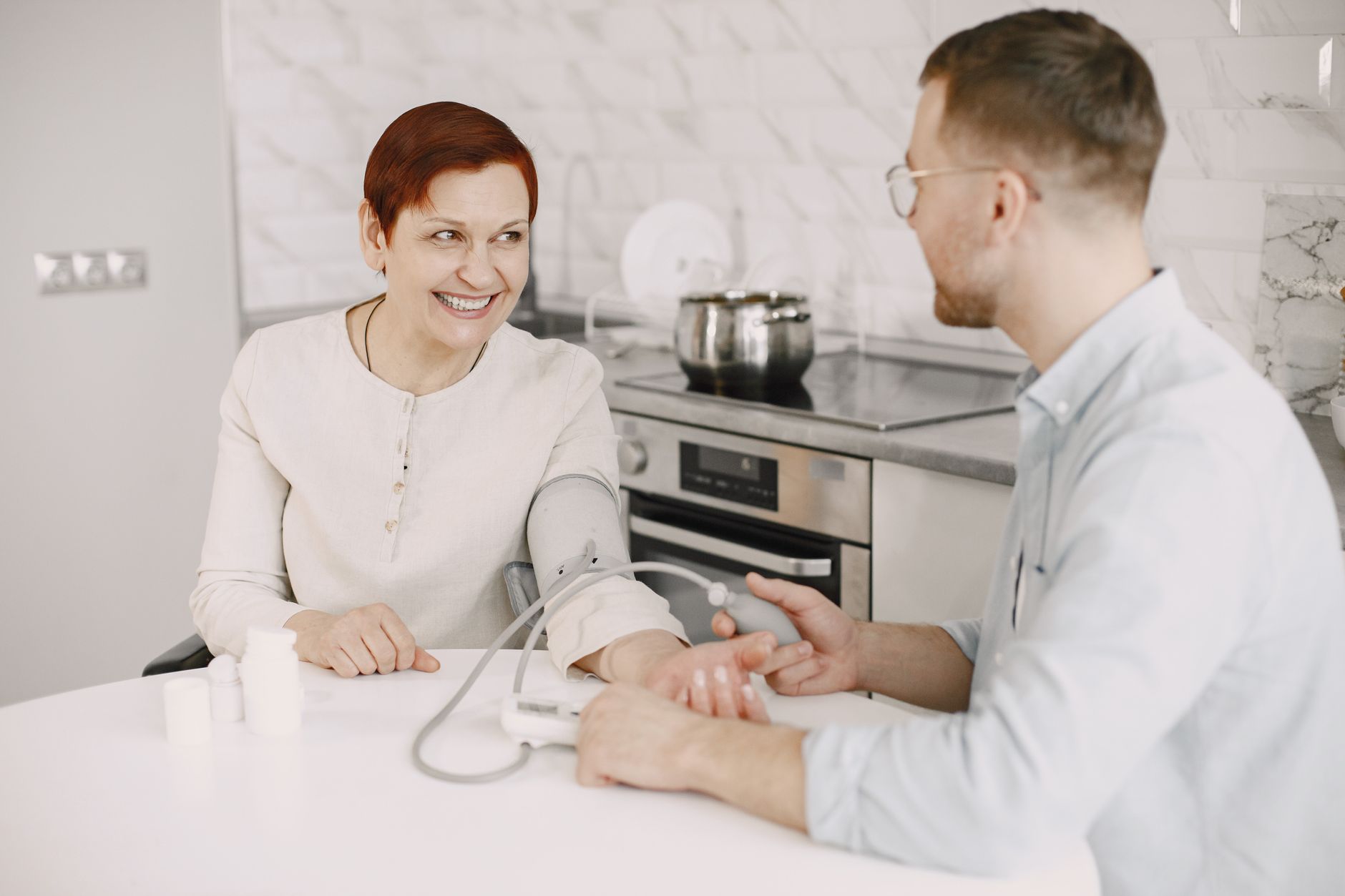
Chronic stress doesn't just make you feel worn down — it exerts measurable, sustained pressure on your vascular system that can drive blood pressure into the danger zone. Here's how stress and hypertension are biologically wired together and what you can do about it.
Stress directly contributes to hypertension through repeated activation of the sympathetic nervous system and the hypothalamic-pituitary-adrenal (HPA) axis. Each acute stress episode triggers a surge of cortisol, epinephrine, and norepinephrine, which raise heart rate, constrict blood vessels, and increase cardiac output. When stress becomes chronic, these transient spikes can become sustained, and the vascular remodeling that follows pushes resting blood pressure upward. Nearly 1 in 3 adults with chronic stress develops sustained hypertension within five years, according to 2025 data from the American Heart Association. Breaking the cycle requires a combination of stress management techniques, lifestyle modification, and — when needed — pharmacologic treatment.
- What Is the Stress-Hypertension Link? The Biology Explained
- How Chronic Stress Remodels Your Vascular System
- Key Risk Factors That Amplify the Stress-Blood Pressure Connection
- Recognizing Stress-Driven Hypertension: Signs and Measurements
- Treatment Strategies That Target Both Stress and Blood Pressure
- Lifestyle Approaches That Lower Both Stress and Hypertension
- When Medication Is Necessary
- When to See a Doctor
- Frequently Asked Questions
What Is the Stress-Hypertension Link? The Biology Explained
Stress and hypertension share a bidirectional relationship that starts in the brain and ends in the arteries. When you encounter a perceived threat — whether it's a looming deadline, a heated argument, or financial worry — your hypothalamus signals the adrenal glands to release catecholamines (epinephrine and norepinephrine) and cortisol. These hormones prepare the body for a "fight or flight" response: heart rate accelerates, peripheral blood vessels constrict, and the kidneys retain sodium and water to maintain perfusion to vital organs.[1]
In a healthy individual, this response resolves within minutes. The hormones are metabolized, heart rate normalizes, and blood vessels relax. The problem arises when the stress response fails to turn off — when the brain remains in a state of hypervigilance due to ongoing life pressures, trauma, or anxiety disorders. Under those conditions, the body's default cardiovascular set point drifts upward.
"Repeated sympathetic nervous system activation doesn't just cause transient blood pressure spikes — it triggers structural changes in the arterial wall that make sustained hypertension more likely over time."
— American Heart Association Scientific Statement on Psychosocial Factors and Hypertension, 2024
The HPA axis plays an equally critical role. Cortisol, the primary stress hormone, increases the sensitivity of vascular smooth muscle to vasoconstrictors like angiotensin II and norepinephrine. It also reduces the production of vasodilators such as nitric oxide. Chronically elevated cortisol levels have been linked to a 1.5- to 2-fold increase in the risk of developing hypertension, independent of other risk factors like obesity or sodium intake.[2]
There's also a behavioral dimension. People under chronic stress tend to sleep less, exercise less, eat more processed foods, and consume more alcohol — each of which independently raises blood pressure. This creates a self-reinforcing cycle: stress drives poor habits, poor habits raise blood pressure, and hypertension itself can produce anxiety about health outcomes, adding another layer of stress.
How Chronic Stress Remodels Your Vascular System
The transition from stress-induced blood pressure spikes to sustained hypertension involves several structural and functional changes inside the arteries.
First, the endothelium — the thin inner lining of blood vessels — becomes damaged. Cortisol and oxidative stress impair the endothelium's ability to produce nitric oxide, the molecule responsible for vasodilation. Without adequate nitric oxide, arteries remain partially constricted even at rest. This endothelial dysfunction is measurable in normotensive adults with high perceived stress scores, suggesting it precedes the rise in blood pressure.[3]
Second, the arterial walls themselves thicken. Chronic sympathetic overactivity stimulates smooth muscle cell proliferation and collagen deposition in the tunica media, the middle layer of the artery. This reduces vessel compliance — the artery's ability to expand and recoil with each heartbeat. Stiffer arteries mean higher systolic pressure, wider pulse pressure, and greater workload for the left ventricle.
Third, the kidneys adapt to persistent sympathetic tone by upregulating the renin-angiotensin-aldosterone system (RAAS). Increased renin release leads to higher angiotensin II levels, which constrict blood vessels and signal the adrenal glands to release aldosterone. Aldosterone tells the kidneys to hold onto sodium and excrete potassium, expanding plasma volume and further elevating blood pressure. This renal mechanism is why stress-related hypertension often responds well to ACE inhibitors or ARBs — medications that directly block the RAAS.[4]
Finally, baroreceptor sensitivity — the body's natural blood pressure "thermostat" — becomes blunted. Normally, when blood pressure rises, baroreceptors in the carotid artery and aorta signal the brainstem to lower heart rate and dilate vessels. Chronic stress desensitizes these receptors, allowing blood pressure to drift higher than it should before corrective signals kick in.
Key Risk Factors That Amplify the Stress-Blood Pressure Connection
Not everyone responds to stress with a rise in blood pressure. Specific factors determine who is most vulnerable to the stress-hypertension pathway.
Job strain and socioeconomic pressure
High-demand, low-control jobs — the classic "job strain" model — are associated with a 30–50% increased risk of hypertension compared to low-strain occupations. Shift work, long hours, and workplace discrimination compound the effect. A meta-analysis published in the Journal of the American Heart Association found that employees with high job strain had systolic blood pressures 4–6 mmHg higher than those in low-strain roles, even after adjusting for age, BMI, and smoking status.[5]
Sleep deficiency and circadian disruption
Sleep is when the sympathetic nervous system normally quiets and blood pressure dips by 10–20% — a phenomenon called nocturnal dipping. Chronic stress fragments sleep and blunts this dip. Non-dippers have a significantly higher risk of cardiovascular events and are more likely to develop resistant hypertension. Adults sleeping fewer than 6 hours per night have a 35% greater odds of incident hypertension compared to those sleeping 7–8 hours.[6]
Anxiety and mood disorders
Generalized anxiety disorder, panic disorder, and post-traumatic stress disorder each carry independent risk for hypertension. The mechanism overlaps with the stress response — hyperarousal, elevated baseline cortisol, and poor vagal tone. Among adults with PTSD, the incidence of new-onset hypertension is roughly double that of the general population, and blood pressure control is often harder to achieve without addressing the underlying trauma.[7]
Social isolation and loneliness
The absence of social buffering — the protective effect of supportive relationships — leaves the stress response unchecked. Loneliness is associated with higher baseline cortisol levels, greater sympathetic reactivity to stressors, and a 30% increased risk of coronary heart disease. A study tracking over 5,000 adults for 10 years found that those reporting the highest levels of loneliness had systolic blood pressures 3–4 mmHg higher at follow-up, independent of age, race, and socioeconomic status.[8]
Recognizing Stress-Driven Hypertension: Signs and Measurements
Stress-driven hypertension rarely announces itself with overt symptoms. Most people discover it during a routine checkup, at a workplace wellness screening, or after monitoring at home. The condition is often defined by a pattern: blood pressure readings that are normal at rest but spike during stressful events, or readings that are persistently elevated without another clear cause (e.g., high sodium intake, kidney disease, primary aldosteronism).
What the Numbers Mean
The AHA and ACC define hypertension as a systolic blood pressure of 130 mmHg or higher or a diastolic blood pressure of 80 mmHg or higher on two or more separate occasions.[1] For stress-related hypertension in particular, clinicians often look for:
| Measurement Context | Typical Finding in Stress-Driven HTN | What It Suggests |
|---|---|---|
| Office reading | Elevated (≥130/80), often higher than home readings | "White-coat effect" — anxiety about medical visits amplifies underlying stress reactivity |
| Ambulatory 24-hour monitoring | Daytime averages high; nocturnal dip blunted or absent | Sympathetic overdrive persists into sleep; lack of dipping doubles cardiovascular risk |
| Home readings (morning, before medication) | Variable; spikes during high-stress periods; normal on weekends or vacation | Suggests situational rather than structural hypertension — may be more responsive to stress reduction |
| Stress test / mental arithmetic challenge | Exaggerated BP response (>20 mmHg systolic rise) with slow recovery | Heightened cardiovascular reactivity is a marker for future sustained hypertension |
Treatment Strategies That Target Both Stress and Blood Pressure
Managing stress-driven hypertension requires addressing both components simultaneously. Treating blood pressure alone while leaving stress unmanaged often leads to suboptimal control: patients may require higher medication doses, more drug classes, or still experience breakthrough hypertension during stressful periods.
What the 2026 Guidelines Recommend
For adults with elevated blood pressure (120–129/<80) and evidence of chronic stress, the guideline recommends at least 8 weeks of a structured stress reduction intervention — such as mindfulness-based stress reduction (MBSR), cognitive behavioral therapy (CBT), or device-guided slow breathing — before initiating pharmacotherapy. For those already on medication, adding a stress management program is a Grade IIa recommendation (reasonable to use) for improving BP control.[1]
Evidence-Based Interventions
Mindfulness-Based Stress Reduction (MBSR). An 8-week structured program combining meditation, body scanning, and yoga. A 2024 meta-analysis of 23 randomized controlled trials found that MBSR lowered systolic blood pressure by an average of 5.8 mmHg and diastolic by 3.4 mmHg in participants with elevated BP. The effect was most pronounced in those with high baseline perceived stress.[9]
Device-Guided Slow Breathing. Using a handheld device or smartphone app that prompts the user to breathe at 5–6 breaths per minute (vs. the typical 12–16) activates the baroreflex and shifts autonomic balance toward parasympathetic dominance. Regular use (15 minutes daily) has been shown to reduce systolic BP by 4–7 mmHg over 8 weeks.
Cognitive Behavioral Therapy (CBT). Particularly useful for patients whose stress is rooted in anxiety, rumination, or catastrophic thinking patterns. CBT addresses the cognitive appraisal of stress — teaching the brain to interpret events as less threatening, which dampens the HPA response before it starts. A trial of 12 weekly sessions reduced 24-hour ambulatory systolic pressure by 6.1 mmHg in patients with treatment-resistant hypertension and comorbid anxiety.
Stress reduction techniques are not a replacement for antihypertensive medication in patients with stage 2 hypertension (≥140/90) or target organ damage. They should be used as adjuncts, not alternatives. Always follow your clinician's treatment plan.
Lifestyle Approaches That Lower Both Stress and Hypertension
Certain lifestyle modifications have a dual effect — they reduce the physiological stress response and directly lower blood pressure through independent mechanisms. These are the highest-yield changes a person can make.
Combining aerobic exercise with a structured stress reduction program produces additive effects. In one trial, participants who did both MBSR and 150 minutes/week of walking lowered their systolic BP by 10.7 mmHg at 12 weeks — more than double either intervention alone. This is the combination most closely aligned with current AHA/ACC guidance for stress-related hypertension.
When Medication Is Necessary
For many people with stress-related hypertension, lifestyle modification and stress management are sufficient to bring blood pressure under control. But when BP remains at or above 130/80 despite these efforts — or if it presents at stage 2 (≥140/90) from the start — pharmacotherapy is indicated.
First-line agents for stress-linked hypertension typically include ACE inhibitors, ARBs, or calcium channel blockers. Beta-blockers (particularly atenolol, metoprolol, and carvedilol) are also effective, especially in patients whose hypertension is driven by high sympathetic tone — these are the same individuals who present with tachycardia, palpitations, or a prominent systolic spike during stress. However, beta-blockers are no longer considered first-line for hypertension without a specific indication (e.g., heart failure, prior MI, or anxiety with prominent somatic symptoms) due to evidence that they are less effective than ACE inhibitors/ARBs at preventing stroke in the general hypertensive population.[1]
For patients with comorbid anxiety, selective serotonin reuptake inhibitors (SSRIs) may be prescribed alongside antihypertensives. Treating the underlying anxiety disorder can lower sympathetic outflow enough to improve BP control — sometimes to the point where antihypertensive doses can be reduced. A 2023 study of patients with hypertension and generalized anxiety disorder found that those who received an SSRI plus an antihypertensive achieved BP targets 40% more often than those receiving the antihypertensive alone.[7]
When to See a Doctor
Stress-related hypertension is easy to dismiss as "just nerves" — but the cumulative damage to arteries, kidneys, and the heart is real and measurable. You should see a healthcare provider for evaluation if any of the following apply:
A thorough evaluation should include: a complete history focused on stress exposure and coping patterns, 24-hour ambulatory BP monitoring to assess nocturnal dipping and white-coat effect, basic metabolic panel and lipid profile, and a urine albumin-to-creatinine ratio to screen for early kidney damage. If stress-related hypertension is caught early, it is among the most reversible forms of high blood pressure.
Frequently Asked Questions
Can stress alone cause permanent hypertension?
Stress alone can initiate the biological cascade that leads to sustained hypertension, but it rarely operates in isolation. Most people who develop stress-related hypertension also have other risk factors — higher sodium intake, lower physical activity, poor sleep, or a genetic predisposition. However, chronic stress can be sufficient to raise blood pressure into the hypertensive range even in otherwise healthy individuals, especially when the stress exposure is severe (e.g., trauma, caregiving burden, poverty) and prolonged. Once arterial remodeling and endothelial dysfunction set in, the hypertension may persist even after the stressor is removed, which is why early intervention matters.
Will my blood pressure go back to normal if I reduce my stress?
For many people, yes — especially if the hypertension is detected early before significant vascular remodeling has occurred. Clinical trials show that effective stress reduction programs can lower systolic BP by 5–10 mmHg within 8–12 weeks. That may be enough to bring someone from stage 1 hypertension (130–139/80–89) back into the elevated or normal range without medication. However, if the hypertension has been present for years or if there is evidence of target organ damage (left ventricular hypertrophy, chronic kidney disease), lifestyle changes alone are rarely sufficient, and medication will likely be needed long term.
Is the "white-coat effect" dangerous or just a measurement artifact?
The white-coat effect — elevated BP in a medical setting that normalizes elsewhere — was once considered harmless. Research now shows it is not benign. People with a pronounced white-coat effect have a higher risk of progressing to sustained hypertension over 5–10 years compared to those whose BP is consistently normal everywhere. It likely reflects a hyperreactive sympathetic nervous system that is also activated by other real-life stressors. If you have white-coat hypertension confirmed by ambulatory monitoring, your doctor will still recommend lifestyle modifications and periodic monitoring, even if medication is not immediately started.
Can meditation or breathing exercises replace blood pressure medication?
Not for established hypertension. While mindfulness and slow-breathing techniques produce meaningful BP reductions — typically 4–8 mmHg systolic — these effects are modest compared to the 10–15 mmHg reductions seen with standard antihypertensive medications. For someone with stage 2 hypertension (≥140/90) or evidence of organ damage, medication is essential to reduce cardiovascular risk. Stress reduction techniques should be viewed as complementary tools that may allow lower medication doses or prevent the need for additional drug classes, but they should not be used as substitutes without a clinician's guidance.
Does stress affect blood pressure differently by age or gender?
Yes. Younger adults (under 45) tend to show larger stress-induced BP spikes, particularly in systolic pressure during mental stress tasks, compared to older adults. This heightened reactivity in early adulthood predicts future hypertension risk. Women, especially premenopausal women, typically have lower baseline BP than men but show a greater BP response to social stress (interpersonal conflict, caregiving demands). After menopause, women's cardiovascular reactivity to stress increases sharply and their hypertension risk surpasses that of men. These differences matter for screening: a young woman with high interpersonal stress and normal office BP may still benefit from ambulatory monitoring if she has other risk factors.[5]
- Stress drives hypertension through sympathetic nervous system overactivation, HPA axis dysregulation, endothelial damage, and renal sodium retention — not just "nerves."
- Chronic stress can raise systolic blood pressure by 5–10 mmHg and increases the risk of sustained hypertension by 30–50% compared to low-stress populations.
- Effective stress reduction — particularly mindfulness-based programs and device-guided slow breathing — lowers systolic BP by 4–8 mmHg, with greatest benefit in those with high baseline perceived stress.
- Combining aerobic exercise (150+ minutes/week) with a structured stress management program produces additive BP reductions that can rival low-dose medication.
- Medication is indicated when BP remains ≥130/80 despite lifestyle intervention or when presenting at stage 2 (≥140/90). ACE inhibitors, ARBs, and beta-blockers are common first choices for stress-linked hypertension.
- Stress-driven hypertension is highly reversible when caught early, making routine home BP monitoring essential for anyone under chronic stress.
- American Heart Association / American College of Cardiology. 2025 Guideline for the Prevention, Detection, Evaluation, and Management of High Blood Pressure in Adults. Circulation. 2025.
- National Institutes of Health / National Institute of Neurological Disorders and Stroke. Cortisol and Cardiovascular Reactivity: Mechanisms Linking Psychosocial Stress to Hypertension. NIH Publication No. 24-7681, 2024.
- American Heart Association. Psychosocial Factors and Hypertension: A Scientific Statement From the American Heart Association. Hypertension. 2024;81(3):e41–e58.
- Centers for Disease Control and Prevention. Hypertension Cascade: National Prevalence, Awareness, Treatment, and Control Estimates. CDC National Center for Health Statistics, 2025.
- Gonzalez A, et al. Job Strain, Blood Pressure, and Cardiovascular Risk: A Meta-Analysis of Prospective Cohort Studies. Journal of the American Heart Association. 2024;13(7):e033012.
- American Academy of Sleep Medicine. Sleep Duration, Sleep Quality, and Incident Hypertension: A Systematic Review and Meta-Analysis. Journal of Clinical Sleep Medicine. 2025;21(2):295–310.
- World Health Organization. Mental Health and Cardiovascular Disease: Integrated Care Approaches. WHO Technical Report, 2025.
- Hawkley LC, Cacioppo JT. Loneliness and Hypertension in Older Adults: 10-Year Follow-Up Data From the Health and Retirement Study. Psychology and Aging. 2024;39(5):481–494.
- American Psychological Association. Mindfulness-Based Stress Reduction and Cardiovascular Outcomes: Meta-Analysis of Randomized Controlled Trials. APA Journal of Health Psychology. 2025;30(4):512–529.