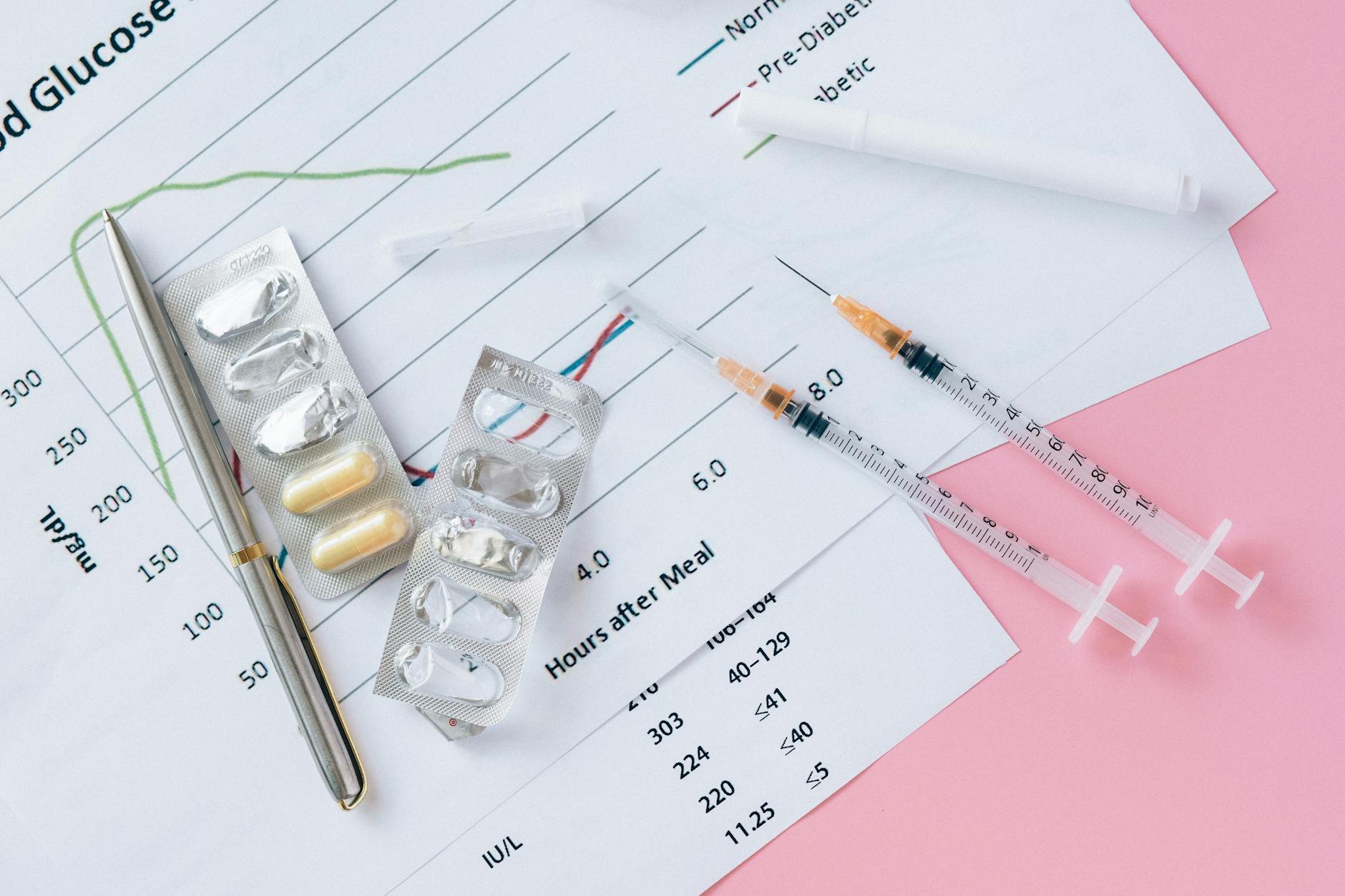
Skeletal muscle is the body's largest glucose reservoir, and resistance training is the most direct way to enlarge and activate it. Here's what the current evidence says about sets, reps, timing, medication interactions, and realistic A1C expectations.
Resistance training lowers blood sugar by building muscle mass and triggering GLUT4 glucose transporters to move to the muscle cell surface without needing insulin. The American Diabetes Association's Standards of Care in Diabetes—2026 recommends 2–3 resistance sessions per week on nonconsecutive days for adults with type 2 diabetes, in addition to at least 150 minutes of weekly aerobic activity.[1]
- What Resistance Training Actually Does to Blood Glucose
- The Physiology: GLUT4, Muscle Mass, and Insulin-Independent Uptake
- What the Evidence Shows for A1C, Fasting, and Post-Meal Glucose
- Resistance vs. Aerobic vs. Combined Training
- Who Benefits Most — and What Changes the Response
- Building a Program That Actually Moves Your Numbers
- Nutrition, Protein, and Workout Timing
- Safety: Hypoglycemia, Blood Pressure, and Retinopathy
- When to Talk to Your Doctor First
- Frequently Asked Questions
What Resistance Training Actually Does to Blood Glucose
A single resistance session lowers blood glucose within hours, and the effect lingers. Muscle contractions during lifting pull glucose out of the bloodstream through a pathway that does not require insulin to open the door — and that enhanced insulin sensitivity typically persists for roughly 24 to 48 hours after the session ends.[1] Two or three well-spaced sessions per week therefore keep the effect running almost continuously.
There are two distinct timelines worth separating in your head. The acute effect is what happens in the hours after you train: glucose uptake rises, glycogen stores in the trained muscle get refilled, and post-meal spikes the next day are often smaller. The chronic effect unfolds over eight to sixteen weeks as muscle fibers thicken, GLUT4 protein content increases, mitochondrial density improves, and total lean mass grows. That second timeline is where the durable metabolic gains live.
Type 2 diabetes damages this system at multiple points. Muscle glycogen storage capacity falls, intramuscular fat accumulates, and mitochondrial oxidative capacity drops — all of which worsen the underlying insulin resistance that drives high fasting glucose. Resistance training directly attacks each of those defects. It also redistributes body composition, reducing visceral fat and preserving the lean tissue that many adults lose at roughly 3–8% per decade after age 30.[5]
Scale matters. Roughly 38 million Americans live with diabetes and about 98 million adults have prediabetes,[2] which means a very large population is walking around with muscle tissue that is under-muscled, under-stimulated, and poor at clearing glucose. The intervention is unglamorous but unusually well-matched to the problem.
The Physiology: GLUT4, Muscle Mass, and Insulin-Independent Uptake
Glucose cannot cross a muscle cell membrane on its own. It needs a transporter, and the main one in skeletal muscle is GLUT4, which normally sits stored inside the cell and shuttles to the surface when insulin binds its receptor and activates the PI3K–Akt signaling cascade. In insulin resistance, that signaling chain becomes sluggish — the transporters stay parked, and glucose accumulates in the blood.
Muscle contraction bypasses that bottleneck. When a muscle fiber contracts hard enough, rising AMP and calcium levels activate AMPK and CaMK signaling, which move GLUT4 to the membrane through a separate route.[1] The practical consequence is significant: even in someone with substantial insulin resistance, exercise can still clear glucose, because it is not relying on the broken pathway.
Muscle contraction opens the glucose door without a key. Insulin resistance blocks the key — it does not block the door.
Core rationale behind post-exercise glucose lowering in type 2 diabetes
Three additional adaptations compound the benefit over months of training:
- Greater glucose storage capacity. Trained muscle holds more glycogen and expresses more glycogen synthase, so it can absorb a larger carbohydrate load after a meal before blood levels rise.[1]
- More total muscle mass. Disposal capacity scales with tissue volume. Adding lean mass is functionally similar to adding a bigger sponge to the system.
- Myokine signaling. Contracting muscle releases interleukin-6 and other myokines that improve insulin sensitivity in the liver and adipose tissue, extending benefits beyond the working limb.
There is also a real distinction between anaerobic and aerobic contributions to the same session. Heavy sets are powered largely by phosphocreatine and stored glycogen, produce a sharp transient rise in catecholamines, and can temporarily nudge glucose upward during the workout itself — especially in type 1 diabetes. That spike is usually followed by a longer, more pronounced drop over the following 12 to 24 hours. Understanding this biphasic pattern prevents panic over a reading taken mid-session.
What the Evidence Shows for A1C, Fasting, and Post-Meal Glucose
Pooled randomized trial data summarized in the ADA Standards of Care show that adding resistance training to usual care lowers A1C by roughly 0.3 to 0.5 percentage points — a modest but clinically meaningful change, and one that stacks on top of whatever glucose-lowering medication a person is already taking.[1] That range is smaller than what metformin or a GLP-1 receptor agonist delivers, which matters when setting expectations: resistance training is an adjunct, not a replacement for pharmacotherapy in most people with established type 2 diabetes.
Where the intervention performs disproportionately well is in the areas medication often handles less completely:
- Post-meal glucose excursions. A short bout of resistance exercise after eating blunts the postprandial rise more effectively than the same exercise performed in a fasted state.
- Fasting glucose. Improvements here tend to show up later than post-meal changes, tracking with reductions in hepatic insulin resistance and visceral fat.
- Strength and physical function. Gains appear within 6–8 weeks and are frequently what keeps people exercising long enough to get the metabolic payoff.
Cardiometabolic benefits extend beyond glucose. The American Heart Association's scientific statement on resistance exercise training documents reductions in resting blood pressure, improved endothelial function, favorable shifts in body composition, and lower cardiovascular risk in adults with and without existing heart disease.[4] For a population in which cardiovascular disease remains the leading cause of death, that is not a secondary outcome.
Adults with type 2 diabetes should perform at least 150 minutes per week of moderate-to-vigorous aerobic activity spread over at least 3 days, with no more than 2 consecutive days without activity, plus 2–3 sessions per week of resistance exercise on nonconsecutive days. Flexibility and balance training are additionally recommended for older adults and those with complications such as peripheral neuropathy or a history of falls.[1]
The nonconsecutive-day detail is not arbitrary. Because the insulin-sensitizing effect decays over roughly 24 to 48 hours, a Monday–Wednesday–Friday pattern maintains continuous coverage, whereas three consecutive days followed by four days off leaves most of the week uncovered.
Resistance vs. Aerobic vs. Combined Training
Resistance training and aerobic training lower glucose through partly different routes, which is exactly why combining them outperforms either alone for most people. Aerobic work drives high-volume, contraction-mediated glucose uptake during the session itself. Resistance work builds the tissue that does the clearing and extends insulin sensitivity well past the last rep.
Builds and preserves lean mass, raises GLUT4 content, extends insulin sensitivity 24–48 hours, improves strength, bone density, and function. Smaller immediate calorie burn; can transiently raise glucose mid-session.
Lowers glucose during and immediately after the session, improves cardiorespiratory fitness and mitochondrial function, higher acute energy expenditure. Does less for muscle mass, strength, or fall risk.
| Dimension | Resistance Training | Aerobic Training | Combined |
|---|---|---|---|
| Primary mechanism | Muscle mass + GLUT4 upregulation, insulin-independent uptake | High-volume contraction-mediated glucose disposal | Both pathways activated |
| Typical A1C effect | ≈0.3–0.5 percentage points[1] | Comparable range in most trials | Largest reductions in head-to-head comparisons |
| Duration of effect | 24–48 hours after session | Mostly during and shortly after | Near-continuous coverage |
| Muscle mass & strength | Substantial gains | Minimal | Substantial gains |
| Cardiorespiratory fitness | Modest | Substantial | Substantial |
| Hypoglycemia risk | Lower during session; delayed risk up to 24 h | Higher during session in insulin users | Requires careful monitoring |
| Best suited to | Older adults, sarcopenia, joint limitations, time-poor schedules | Most adults, especially those with cardiac risk factors | Nearly everyone with type 2 diabetes |
Neither modality should be chosen over the other. The ADA position is explicit that both aerobic and resistance training are recommended, not one instead of the other.[1] If time is the binding constraint — and it usually is — prioritize two resistance sessions per week for the muscle-preserving and glucose-storage benefits, and fill the remaining days with brisk walking or cycling. Federal physical activity guidance sets the floor at 150 minutes of moderate aerobic activity plus muscle-strengthening work on 2 or more days weekly for all adults, diabetic or not.[3]
Who Benefits Most — and What Changes the Response
Response to resistance training is real but variable. Two people can follow identical programs and see A1C changes that differ by half a percentage point, driven by factors that are partly modifiable. The items below explain where the variance comes from.
Does the starting A1C change how much you gain?
Yes, substantially. People starting with a higher A1C generally see larger absolute improvements, because there is more room to move and because their baseline insulin resistance is more severe — which is exactly the defect that contraction-mediated glucose uptake bypasses. Someone starting at 8.5% may drop 0.6–0.8 points with consistent training plus diet, while someone already at 6.5% may see a 0.2-point change that is still meaningful for long-term complication risk.
Does age limit the benefit?
Age blunts the hypertrophy response but not the glucose response. Adults in their 70s and 80s typically add less muscle mass per session than people in their 30s, yet still achieve meaningful improvements in insulin sensitivity and glycemic control. The limiting factor in older adults is more often training consistency and protein intake than biological ceiling.
How much does total muscle mass matter?
It is one of the stronger predictors of long-term glycemic control. Skeletal muscle handles the large majority of insulin-stimulated glucose disposal,[1] so losing lean mass — through aging, inactivity, or rapid weight loss without resistance training — reduces your glucose disposal capacity. This is why programs that pair aggressive caloric restriction with no strength work can improve weight while worsening glucose handling.
Do diabetes medications change the picture?
They change the safety profile more than the efficacy. Insulin and sulfonylureas (glipizide, glyburide, glimepiride) carry genuine hypoglycemia risk with exercise and often need dose adjustment or carbohydrate planning. Metformin, GLP-1 receptor agonists, SGLT2 inhibitors, and DPP-4 inhibitors rarely cause exercise-related hypoglycemia on their own, though SGLT2 inhibitors warrant attention to hydration and to euglycemic ketoacidosis risk during prolonged or unusually strenuous sessions.
Why do some people see no change in the first month?
Early strength gains come mostly from neural adaptation — better motor unit recruitment and coordination — rather than new muscle tissue, so disposal capacity has not yet expanded. Blood glucose improvements in the first 4 weeks are typically driven by the acute post-session effect and are easily missed if you only check fasting values on non-training days. Consistent training for 8–12 weeks is the realistic window for A1C-relevant change.
Building a Program That Actually Moves Your Numbers
A workable program does not require a commercial gym, expensive equipment, or a personal trainer. It requires progressive overload, coverage of major muscle groups, and enough frequency to keep insulin sensitivity elevated across the week. The checklist below covers the design elements that matter most for glycemic control specifically.
A simple 4-week progression for beginners
The four patterns that most often stall results: training the same muscles on back-to-back days and losing the sensitization window; using weights so light that no meaningful contraction stimulus occurs; doing only machine-based isolation work for small muscles while ignoring legs and hips; and abandoning the program at week three because fasting glucose has not budged yet.
You are on track if you are training 2–3 times weekly with 48 hours between sessions, adding weight or reps every 1–2 weeks, feeling genuinely challenged in the last 3 reps of each set, noticing improved post-meal readings within 4–6 weeks, and experiencing improved strength in daily tasks — stairs, groceries, getting out of a chair — by week 8.
Nutrition, Protein, and Workout Timing
Training adaptations depend on what you eat around them. Protein intake is the most consequential variable for preserving and building the muscle that does the glucose clearing. Adults with type 2 diabetes pursuing resistance training generally benefit from roughly 1.2 to 1.6 grams of protein per kilogram of body weight daily, distributed across meals rather than concentrated at dinner.[1] For a 90 kg adult, that is approximately 108 to 144 grams per day.
Carbohydrate handling around workouts deserves nuance rather than restriction. If you take insulin or a sulfonylurea, exercising on a low blood glucose level increases hypoglycemia risk, and a 15–20 gram carbohydrate snack before training may be appropriate when glucose is trending low. If you manage with metformin, GLP-1 receptor agonists, or lifestyle alone, pre-workout carbohydrate is rarely necessary and a small protein-and-carbohydrate meal 1–3 hours before training generally produces better glucose stability than training fasted.
Post-meal training — starting 30 to 60 minutes after the first bite of a meal — consistently blunts the postprandial glucose rise more than the same session performed before eating. If your schedule only allows early morning training, that is still far better than no training; the post-meal advantage is a refinement, not a requirement.
Hydration matters more than most people expect. Dehydration raises blood glucose concentration through reduced renal clearance and elevated stress hormones, and it also degrades strength performance. Two to three cups of water in the 2 hours before a session is a reasonable target, with additional intake during longer workouts.
Alcohol deserves a specific warning. Consuming alcohol after a resistance session compounds the post-exercise hypoglycemia risk, particularly in insulin users, because it suppresses hepatic glucose output precisely when the body is trying to defend against a glucose drop. If you drink, do it with food and check glucose before bed.
Safety: Hypoglycemia, Blood Pressure, and Retinopathy
Resistance training is safe for the overwhelming majority of people with diabetes, but a handful of specific risks deserve attention before the first session rather than after.
One counterintuitive safety point for people with type 1 diabetes: heavy resistance work is more likely to raise glucose acutely than to lower it, because catecholamine and growth hormone release can transiently increase hepatic glucose output. A modest pre-session insulin reduction, individualized with your care team, is often more appropriate than extra carbohydrate in that scenario.
When to Talk to Your Doctor First
Most people can begin a moderate resistance program without a formal medical evaluation. Certain situations warrant a conversation before you start, and a few warrant one before your next session.
- You take insulin or a sulfonylurea and have experienced hypoglycemia unawareness or a severe low in the past year.
- You have known proliferative retinopathy, recent laser treatment, or an untreated retinal bleed.
- You have known coronary artery disease, heart failure, or you develop chest pressure, unusual breathlessness, or palpitations during exertion.
- You have significant peripheral neuropathy, balance problems, or a history of falls.
- You have an active foot ulcer, recent joint replacement, or an unrepaired hernia — all of which change which exercises are appropriate.
- Your blood pressure is consistently above 160/100 mmHg or is not yet controlled on medication.
- You have stage 4 or 5 chronic kidney disease or are on dialysis, where fluid and electrolyte considerations alter exercise planning.
Bring a specific question to that appointment: "I want to start lifting weights twice a week. Do I need a medication adjustment, and are there movements I should avoid?" That framing produces a far more useful answer than a general request for permission.
Frequently Asked Questions
Can resistance training alone control blood sugar?
For prediabetes and mild, recently diagnosed type 2 diabetes, resistance training combined with dietary change can sometimes achieve target glucose control without medication. For established type 2 diabetes with an A1C well above target, resistance training alone is unlikely to get you there — but it reliably improves control alongside medication and reduces the dose escalation you might otherwise need. It is an adjunct with a strong independent effect, not a substitute for pharmacotherapy in most cases.
How quickly will I see changes in my blood sugar?
Post-meal readings often improve within 2 to 4 weeks of consistent training, because the acute post-session effect is immediate. Fasting glucose typically takes 6 to 12 weeks to shift meaningfully, tracking with reductions in hepatic insulin resistance. A1C changes are best assessed at the 3-month mark, since that reflects roughly the lifespan of a red blood cell.
Why did my blood sugar go up during my workout?
Heavy or high-intensity resistance work triggers adrenaline, cortisol, and growth hormone release, which signal the liver to release glucose. In people with type 1 diabetes especially, this can produce a temporary rise during or immediately after a session. It is usually followed by a longer decline over the next 12 to 24 hours. Track the pattern across several sessions rather than reacting to one reading.
Do I need a gym or heavy weights to get the benefit?
No. Resistance bands, adjustable dumbbells, and bodyweight progressions such as chair squats, incline push-ups, and step-ups all produce meaningful glucose and strength benefits when the load creates genuine muscular challenge and increases over time. Progressive overload is the operative variable, not equipment cost. That said, leg-focused movements with real resistance — not just arm curls — are where the largest glycemic payoff lives.
Can I replace my diabetes medication with resistance training?
That decision belongs to your prescriber, and it should be made based on serial A1C and glucose data rather than assumption. What is common and appropriate is medication de-escalation after months of consistent training and diet change have demonstrably improved control. Never reduce or stop insulin or a sulfonylurea on your own — doing so carries a risk of severe hyperglycemia, and abruptly stopping insulin in type 1 diabetes can precipitate diabetic ketoacidosis.
Is resistance training better before or after a meal?
After, for glucose control specifically. Starting a session 30 to 60 minutes after eating produces a larger reduction in the post-meal glucose spike than training fasted. If your schedule makes pre-breakfast training the only realistic option, do that instead — adherence beats optimization.
How long until I notice a difference in strength?
Strength gains appear faster than glycemic gains. Most beginners notice easier stair climbing, better chair rises, and more confident carrying within 4 to 6 weeks, driven largely by neural adaptation. Visible muscle changes typically take 8 to 12 weeks, and A1C-relevant metabolic change follows the same 12-week horizon.
- Resistance training lowers blood glucose by moving GLUT4 transporters to the muscle cell surface through a contraction-driven pathway that does not require insulin, making it effective even when insulin resistance is significant.
- The ADA Standards of Care in Diabetes—2026 recommends 2–3 resistance sessions per week on nonconsecutive days for adults with type 2 diabetes, alongside at least 150 minutes of weekly aerobic activity.[1]
- Enhanced insulin sensitivity lasts roughly 24–48 hours after a session, which is why spacing workouts across the week matters more than total weekly volume.
- Resistance training typically reduces A1C by about 0.3–0.5 percentage points on top of usual care — modest alone, meaningful when combined with medication, aerobic exercise, and diet.[1]
- Beyond glucose, resistance training lowers resting blood pressure and improves cardiovascular risk profile in adults with and without heart disease.[4]
- Insulin and sulfonylurea users face meaningful delayed hypoglycemia risk up to 24 hours post-session and should plan glucose checks before bed after hard workouts.[1]
- American Diabetes Association. Standards of Care in Diabetes—2026. Diabetes Care.
- Centers for Disease Control and Prevention. National Diabetes Statistics Report. cdc.gov
- U.S. Department of Health and Human Services. Physical Activity Guidelines for Americans, 2nd edition.
- American Heart Association. Scientific statement on resistance exercise training in individuals with and without cardiovascular disease, 2024. heart.org
- National Institute on Aging. Resources on muscle loss and sarcopenia with aging. nia.nih.gov


